Blood had crusted beneath David Caldwell’s fingernails long before the morning sun climbed over the jagged peaks of the Dragoon Mountains. In the Arizona Territory of 1874, survival was never guaranteed. It was a daily, brutal negotiation with hunger, cold, solitude, and the unforgiving shape of the land. When a shriek split the frosty silence of the pine forest that morning, David’s first thought was simple and practical. Some predator had finally stumbled into one of the old iron jaws scattered through the high country. A mountain lion, perhaps. A wolf. Something wild meeting something meaner.
He was wrong.
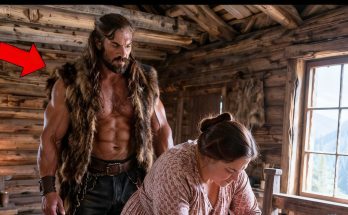
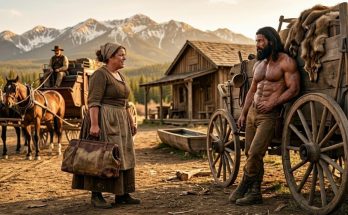
The winter of 1874 had settled over the Arizona high country like a suffocating weight, pressing life flat beneath snow and ice. David, 38 years old and already more ghost than man, moved through it with the mechanical steadiness of someone who had forgotten how to expect comfort from the world. He had been a Union soldier once, years earlier, before Antietam and all the other slaughter that followed had frozen some essential part of him from the inside out. After the war, he had traded blue wool for buckskin, men for mountains, and memory for labor. He lived alone in a hand-hewn cabin perched near the edge of Cochise’s stronghold, in country where white men were more often found as scattered bones than as settled neighbors.
His only company was a scarred coonhound named Barnaby and the familiar weight of his Winchester 73.
That morning the air was so sharp it cut at the inside of his lungs. He was checking his marten lines, his beard tipped with frost, his breath drifting out in white plumes that disappeared among the ponderosa pines. Then the scream came again, unmistakably human this time, threaded with such raw agony that it stopped him mid-step. Barnaby whined low in his throat, the fur along his spine bristling. David unslung his rifle, thumbed back the hammer, and moved toward the sound with the silent caution isolation had taught him.

The screaming faded into ragged sobbing by the time he found the clearing.
It lay beneath a granite overhang, snow-filled and hard with cold. At first he saw only blood. It slashed violently across the white ground, bright enough to look unreal. Then he saw the woman pinned against the base of a great oak, and the whole scene resolved with a sickening clarity.
She was Apache.
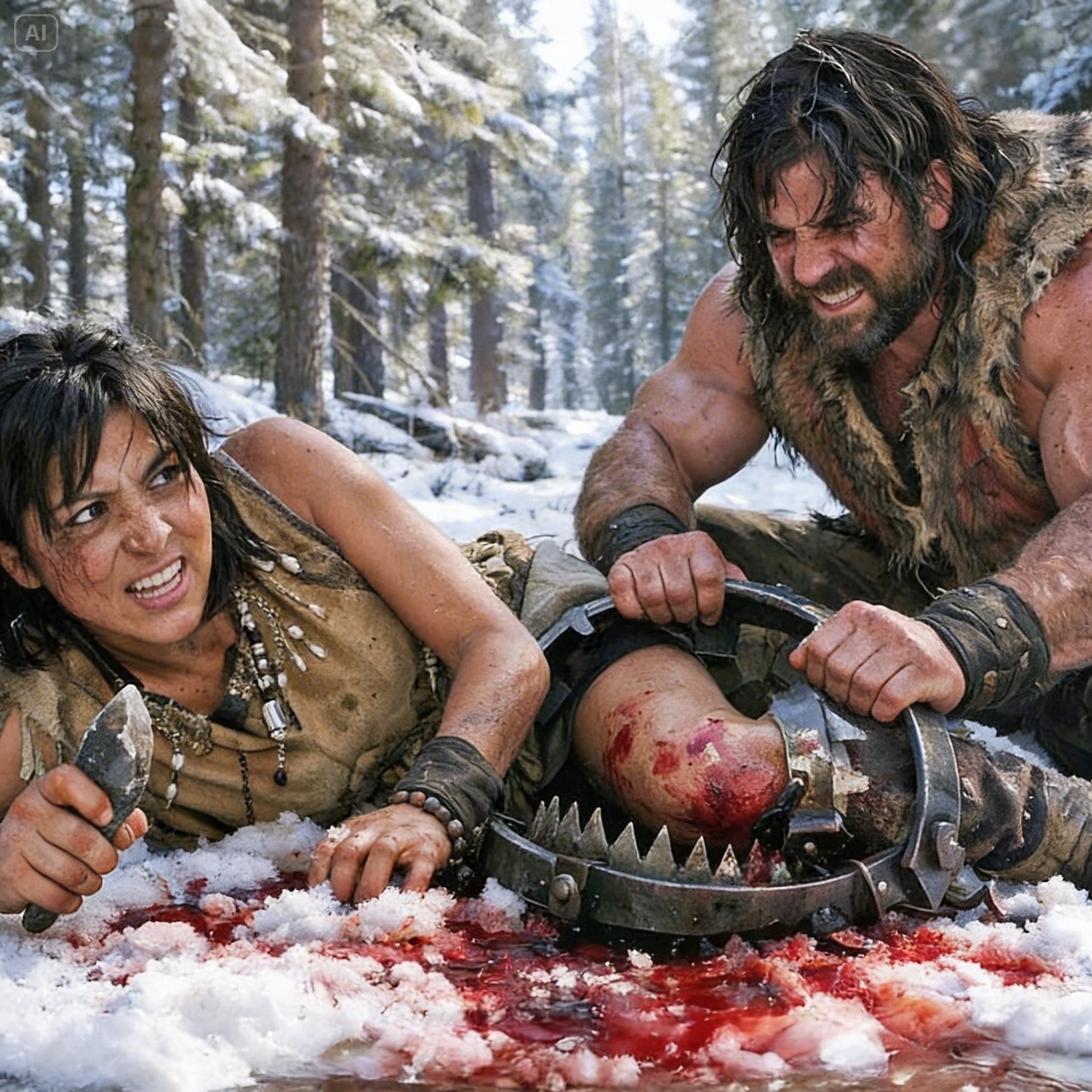
Her buckskin dress was heavy for winter and decorated with tin cones that gave off a faint, trembling jingle when she moved. Her thick black hair had been hacked short, the traditional sign of deep mourning among the Chiricahua. But it was her leg that seized his full attention. Clamped around her right calf, just below the knee, was a Newhouse number 6 bear trap, a monstrous contraption of forged steel weighing roughly 40 lb, built to cripple something far larger than a human being. Its teeth had bitten through leather and flesh. Blood soaked her boot and had frozen in dark sheets around the rusted iron.
David stepped into the clearing. The woman’s head snapped up.
Her eyes were black and brilliant with pain and terror. She saw at once what he was. A white man. An intruder. An enemy. Her hand clawed desperately through the bloodied snow until her fingers closed around a jagged piece of flint. She raised it toward him with the last of her strength, a pathetic weapon and a fierce one all the same. Her face tightened into something beyond fear, beyond pain, into pure defiance.
“Easy,” David said, his voice rough from disuse.
He lowered the Winchester slowly and let it rest in the snow where she could see he was not pointing it at her.
“I ain’t here to hurt you.”
He tried again in the rough Spanish that passed as a trade tongue through much of the borderlands.
“No te haré daño.”
She did not lower the flint. Her breath hitched sharply as another wave of pain rolled through her, and for a moment her eyes squeezed shut. David could see the truth plain enough. The cold was dangerous, but the blood loss and shock would kill her first. He moved closer, slowly and openly, and kicked the stone from her frozen hand. She spat at him and cursed him in Apache, but she was too weak to do anything more.
“Hold still,” he grunted.
He knelt beside the trap and studied it. It was not his. David did not use traps that size. He hunted for fur, not extermination, and he recognized at once the heavy chain running to the oak. The trap was old, rusted, and deliberately hidden beneath a layer of pine needles. Whoever had set it had not been after food. Whoever had set it had meant for something to suffer.
Opening a number 6 Newhouse without proper levers required enormous force. David had no tools for it, and no second man. He stripped off his buffalo hide coat, exposing his wool shirt to the killing cold, and looked at her one last time.
“This is going to hurt.”
He did not know whether she understood the words, but she understood his face.
Planting his boots on the two heavy springs, he seized the oak trunk for balance and threw his full 200-lb frame downward. The rusted steel resisted. The springs barely shifted. He roared and bore down harder, every muscle in his body straining, veins standing out in his neck. The metal groaned. The jaws parted, slowly, stubbornly, until at last they opened wide enough.
With a wet, tearing sound of flesh and ruined leather, the trap released her leg.
The woman gasped once, a terrible breathless sound, and collapsed backward into unconsciousness.
David kicked the trap away. It snapped shut on empty air with a crack like a gunshot.
He stripped off his leather belt and cinched it hard above her knee as a makeshift tourniquet. The wound was ugly, worse than ugly. Flesh torn open, muscle shredded, bone chipped. But the artery appeared intact, and that meant the difference between impossible and merely desperate. He wrapped her in his buffalo coat, lifted her over his shoulder, and began the mile-long march back to his cabin through the snow, leaving a red trail behind him.
His cabin was little more than a log box with a stone hearth, but to a dying person it might have passed for a sanctuary. It smelled of woodsmoke, tobacco, drying hides, and old winter. David laid her on his own cot and fed the fire until heat filled the small room like a physical force. Then time collapsed into work.
He boiled water.
He sterilized a needle and heavy cotton thread.
He poured rye whiskey over the wound, and the woman came awake with a scream so violent he had to jam a rag between her teeth. For hours he played both butcher and savior. He cut away leather and cloth. He picked rust and wool fibers from her torn flesh. He stitched the wound closed with hands that were not gentle but were steady. He had learned more medicine in war than he had ever wanted to know. What one could close, what one could not save, how much blood a body could lose and still claw back its life. He worked by firelight, jaw clenched, saying little.