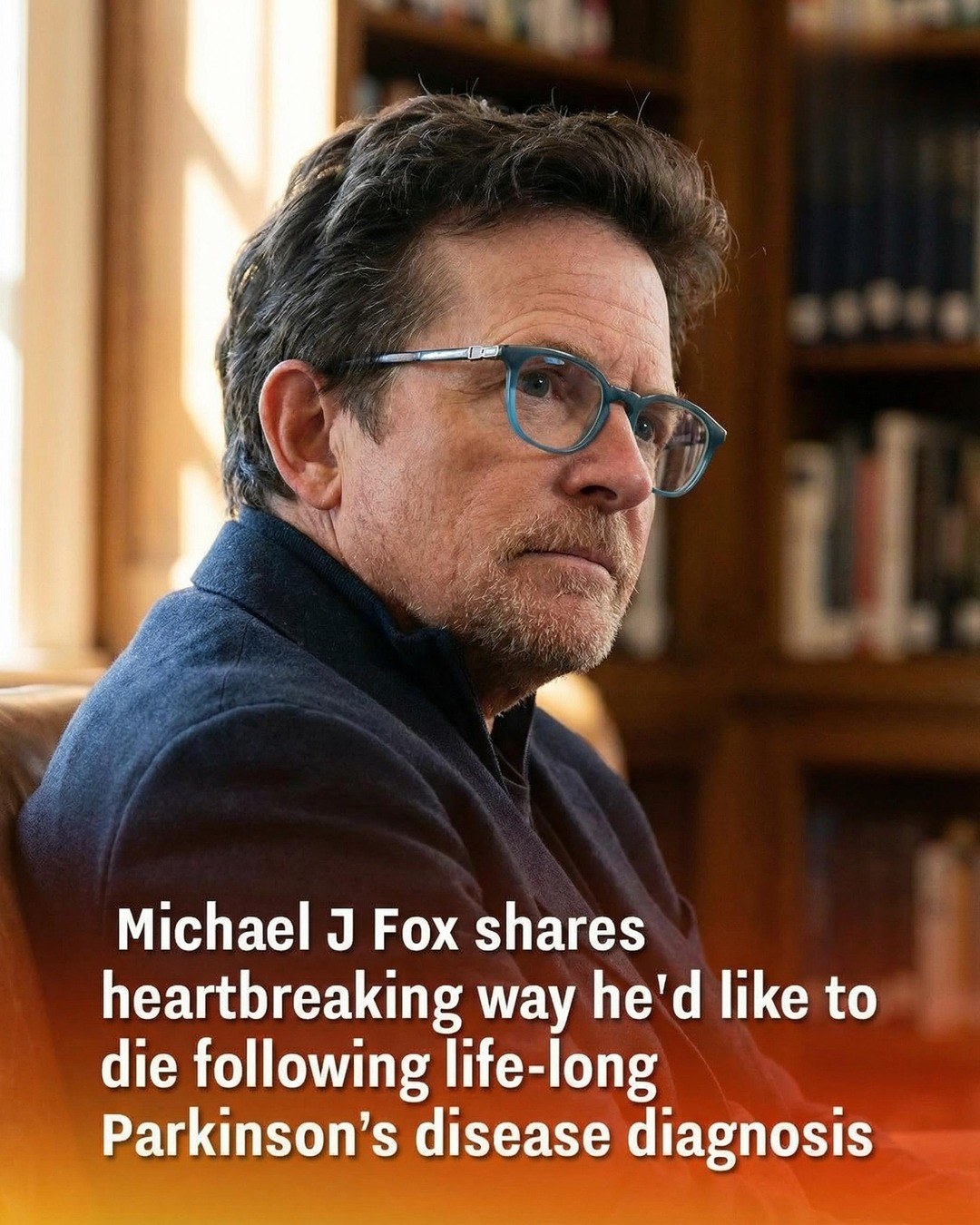
In 1991, Michael J. Fox was the personification of the American “Everyman”—witty, agile, and seemingly invincible. At 29, he was navigating the stratospheric success of Back to the Future and Family Ties when a persistent twitch in his pinky finger led to a life-altering diagnosis: young-onset Parkinson’s disease. For an actor whose craft relied on precise physical comedy and boyish energy, the diagnosis was a direct threat to his identity. Yet, in the thirty-four years since, Fox has transformed a private tragedy into a global movement, proving that while Parkinson’s may have reshaped his movement, it never touched his momentum.

The Biological Landscape of Parkinson’s
To understand Fox’s journey, one must understand the condition he has navigated since his twenties. Parkinson’s disease is a progressive neurodegenerative disorder that primarily affects the motor system.
-
The Dopamine Deficiency: The disease is characterized by the death of cells in the substantia nigra, a region of the midbrain. These cells produce dopamine, a chemical messenger essential for smooth, purposeful muscle movement.
-
The Symptoms: As dopamine levels drop, patients experience the four primary motor symptoms: tremors, rigidity (stiffness), bradykinesia (slowness of movement), and postural instability (impaired balance).
-
The Young-Onset Factor: Being diagnosed at 29 is rare; only about 10% of Parkinson’s cases are diagnosed before age 50. This presented Fox with a unique set of challenges regarding career longevity and long-term medication side effects.
From Secrecy to Global Advocacy
Fox famously kept his diagnosis private for seven years, continuing to star in the hit series Spin City while using clever physical blocking and props to hide his tremors. In 1998, he “stepped out of the shadows,” and in 2000, he launched the Michael J. Fox Foundation for Parkinson’s Research (MJFF).
The Foundation’s Impact (As of 2025):
-
Funding: The MJFF has raised over $2 billion for Parkinson’s research.
-
The “Biomarker” Breakthrough: In 2023, the foundation announced a revolutionary discovery—a “biomarker” (the alpha-synuclein seeding assay) that can detect the disease in living people before symptoms even appear.
-
Patient-Centric Research: Fox shifted the paradigm from purely academic research to “high-risk, high-reward” clinical trials that prioritize patient quality of life.
The Philosophy of “Realistic Optimism”
Now in his mid-60s, Fox’s public appearances are characterized by a raw, moving honesty. He does not sugarcoat the reality of the disease—he has spoken candidly about broken bones from falls and the increasing difficulty of speech—yet he remains “an incurable optimist.”
| Era | Focus |
| 1980s | The “Golden Boy” of Hollywood; defined by agility and wit. |
| 1990s | Private struggle and adaptation; the “hidden” years. |
| 2000s–2010s | Public advocacy; the founding of the MJFF and return to acting in guest roles (The Good Wife). |
| 2020s | The “Elder Statesman” of resilience; focus on legacy, literature, and the documentary Still. |

A Legacy Beyond the Screen
Michael J. Fox’s story is no longer just about Marty McFly or Alex P. Keaton. It is about a man who chose to be the face of a disease so that others wouldn’t have to face it alone. His journey has challenged the Hollywood obsession with “perfection,” replacing it with a narrative of dignity through adaptation.
As he recently reflected in his memoir No Time Like the Future, the “hero’s journey” isn’t about defeating the obstacle, but about finding a way to live a meaningful life while the obstacle still exists. Through his foundation and his own personal example, Fox has ensured that for millions of people, a Parkinson’s diagnosis is no longer the end of the story—it is simply the start of a new, albeit more challenging, chapter.