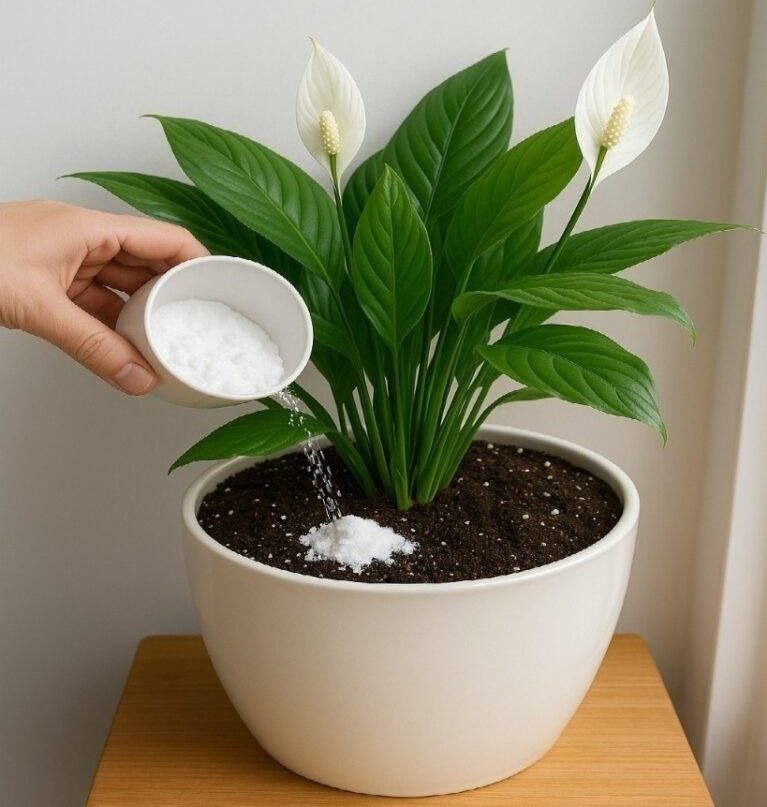
The Natural Secret: Aloe Vera Fertilizer (Easy 2-Minute Recipe)
Aloe vera isn’t just for sunburns—it’s packed with enzymes, vitamins (A, C, E), and amino acids that gently nourish plants, stimulate root growth, and improve soil health—without harsh chemicals.
 What You’ll Need:
1 fresh aloe vera leaf (from a mature plant)
→ No plant? Use 2–3 tbsp pure, food-grade aloe vera gel (check: no alcohol, no dyes!)
2–3 cups of filtered or rainwater (not tap—chlorine harms peace lilies!)
A small blender or fork (no fancy tools needed)
How to Make It:
Extract the gel: Slice open the aloe leaf and scoop out the clear inner gel. Avoid the yellow latex near the skin—it’s bitter and can irritate plants.
Blend or mash: Mix the gel with 2–3 cups of water until smooth.
Strain (optional): If using a blender, strain through a fine mesh to remove fibers—though a few bits won’t hurt.
Use immediately or store in the fridge for up to 5 days.
 How to Apply:
Water your peace lily with this mixture every 2 weeks instead of plain water.
Use just enough to moisten the soil—never let the pot sit in water.
Always use room-temperature liquid to avoid shocking roots.
Why Aloe Vera Works (The Science Simplified)
Natural growth hormones (like auxins and gibberellins) encourage root development and leaf vitality.
Anti-fungal properties help prevent root rot—a common peace lily killer.
Gentle hydration: Aloe’s mucilaginous texture helps retain moisture in soil without waterlogging.
pH-balanced: Unlike tap water, aloe water is neutral, protecting sensitive roots.
Many plant lovers report new leaves within 2–3 weeks and first blooms in 6–8 weeks after starting this routine.
Bonus: 5 More Peace Lily Care Secrets for Lasting Beauty
Light Matters: Place in bright, indirect light (e.g., near an east-facing window). Too dark = no blooms. Direct sun = scorched leaves.
Ditch the Tap Water: Use filtered, distilled, or rainwater. Peace lilies are sensitive to fluoride and chlorine.
Humidity is Key: Mist leaves 2–3x/week or place the pot on a pebble tray with water. These tropical beauties crave moisture in the air!
Don’t Overwater: Wait until the top inch of soil is dry before watering. Drooping = “I need water!” but chronic drooping = root rot.
Wipe Leaves Monthly: Dust blocks light. Gently wipe with a damp cloth to keep them glossy and photosynthesizing efficiently.
FAQs: Peace Lily Care, Solved
Q: Can I use bottled aloe vera gel from the drugstore?
A: Only if it’s 100% pure aloe with no added alcohol, fragrance, or dyes. Check the label—most “skin gels” contain preservatives that harm plants.
Q: How often should I fertilize beyond aloe water?
A: During growing season (spring–summer), use a balanced liquid fertilizer (20-20-20) diluted to half-strength once a month. Skip in winter.
Q: Why are my peace lily’s flowers green?
A: That’s normal! The white “flower” (spathe) ages to green as it matures. New blooms start white—so if you’re not seeing white, it’s likely due to low light or nutrient deficiency.
Q: My leaves are brown at the tips—what’s wrong?
A: Usually tap water chemicals or low humidity. Switch to filtered water, increase misting, and trim brown tips with clean scissors.
Q: Can I use this aloe water on other houseplants?
A: Yes! It’s great for ferns, pothos, spider plants, and orchids—any plant that likes gentle, organic nourishment.
Give Your Peace Lily the Love It Deserves
Your peace lily isn’t just decor—it’s a living air purifier, a mood booster, and a quiet companion in your home. With one simple switch from plain water to aloe vera tonic, you’re not just watering… you’re nourishing, protecting, and inspiring it to bloom.
So grab that aloe plant (or a bottle from the health food aisle), mix up a batch, and watch your peace lily transform from “meh” to majestic—all with nature’s help.
Tried the aloe vera trick? Share your results in the comments! Did your peace lily send up a new bloom? We’d love to celebrate your green thumb success with you.