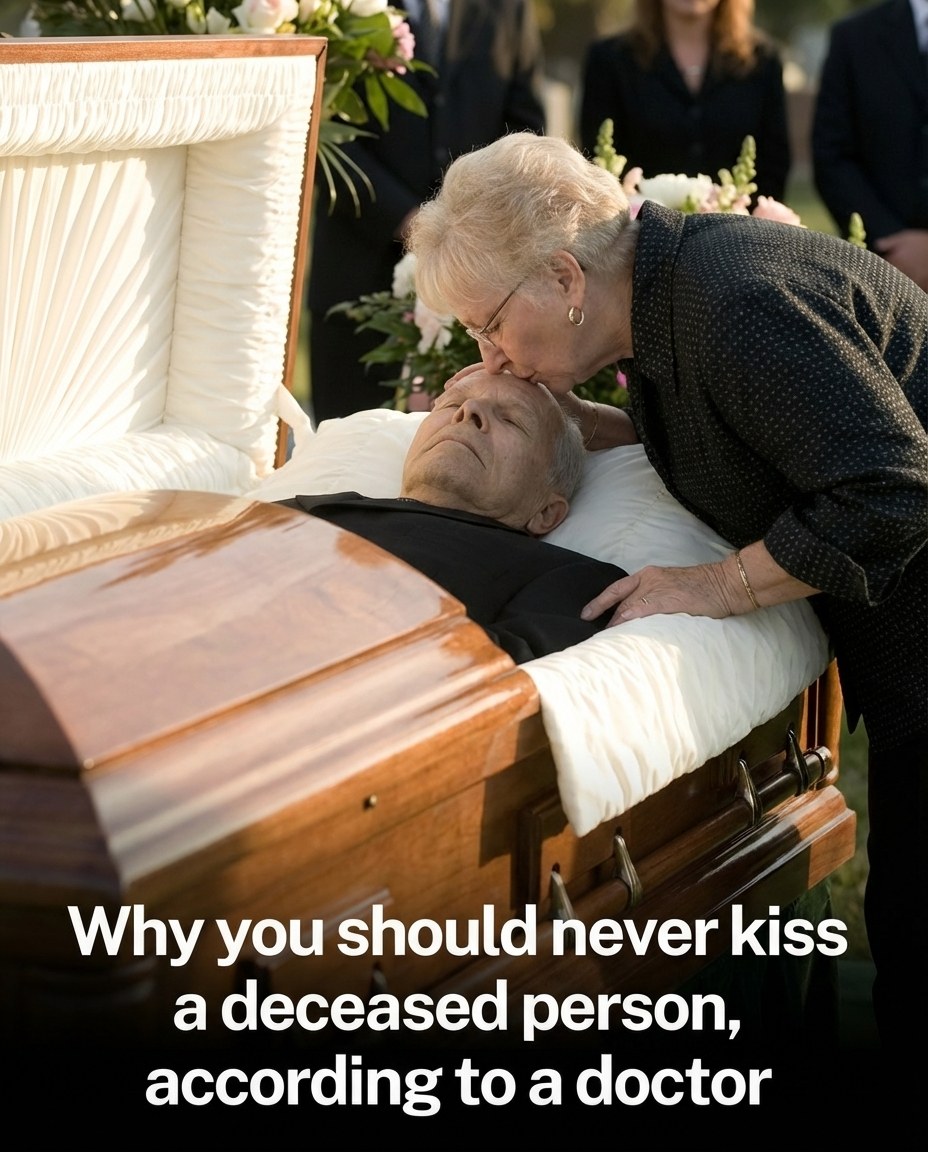
In the raw immediacy of grief, human instinct almost always overrides clinical logic. When a loved one passes, we are driven by a primal need for physical closure—a final kiss on the forehead, a lingering touch of the hand, or a quiet moment of proximity. These are not merely cultural habits; they are profound rituals of transition that bridge the gap between presence and absence. However, as our understanding of pathology evolves, medical professionals are beginning to address a sensitive question: Does physical contact with the deceased pose a legitimate health risk? This inquiry, while seemingly cold in the face of tragedy, has sparked a necessary dialogue between the sanctity of mourning and the realities of public health.
The Biological Reality of Death
The central point emphasized by health experts is that death is a process, not an instantaneous sterilization. For a window of time following the cessation of life, the body remains a biological environment. Because the immune system is no longer active, it can no longer regulate the microorganisms—bacteria and viruses—that naturally exist within and on the human frame.
[Table: Microbial Risks Based on Cause of Death]
| Cause of Death | Potential Risk Level | Common Considerations |
| Non-Infectious (Heart disease, trauma, stroke) | Minimal | Brief contact is generally considered safe for healthy individuals. |
| Respiratory Illness (Pneumonia, certain viruses) | Moderate | Pathogens may persist in fluids; facial contact carries higher risk. |
| Bloodborne Pathogens (Hepatitis, HIV/AIDS) | Specific | Risk is tied to contact with bodily fluids rather than intact skin. |
The Psychological Cost of Distance
While doctors focus on physical safety, mental health professionals stress the “psychological safety” provided by touch. Rituals are the brain’s way of processing the finality of loss. When these traditions are disrupted—as seen during the height of global pandemics—families often experience “complicated grief,” a state marked by unresolved sadness and a sense of the loss being “unfinished.”
For many cultures, touching the deceased is a sacred duty. To be told that a final kiss is a “hazard” can feel like an affront to human dignity. The challenge, therefore, is not to forbid these actions, but to provide a framework for informed choice.
Strategies for a Safe Farewell
Most experts agree that a one-size-fits-all policy is neither compassionate nor necessary. Instead, they suggest a middle ground that respects both the heart and the science:
-
Transparency with Professionals: Funeral directors and medical staff can provide specific guidance on whether a contagious illness was present, allowing families to gauge their own risk.
-
Symbolic Alternatives: If a direct kiss on the face is discouraged, holding a hand, touching a shoulder, or placing a symbolic object can provide similar emotional release with lower biological risk.
-
Timing: Waiting until a body has been professionally prepared and sanitized by a mortician significantly reduces the presence of surface pathogens.
-
Standard Hygiene: Simple practices, such as washing hands before and after contact, remain the most effective way to balance intimacy with safety.
Conclusion: Intent Over Proximity
Ultimately, the depth of a goodbye is not measured by the proximity of a kiss, but by the intention behind the gesture. Religious and cultural leaders have increasingly noted that prayers, spoken words, and shared silence carry the same spiritual weight as physical touch.
As science and emotion intersect at the end of life, the goal is to replace fear with awareness. By understanding the biological realities of death, families can move through their grief with clarity, ensuring that their final act of love is one that honors the deceased while protecting those who remain.