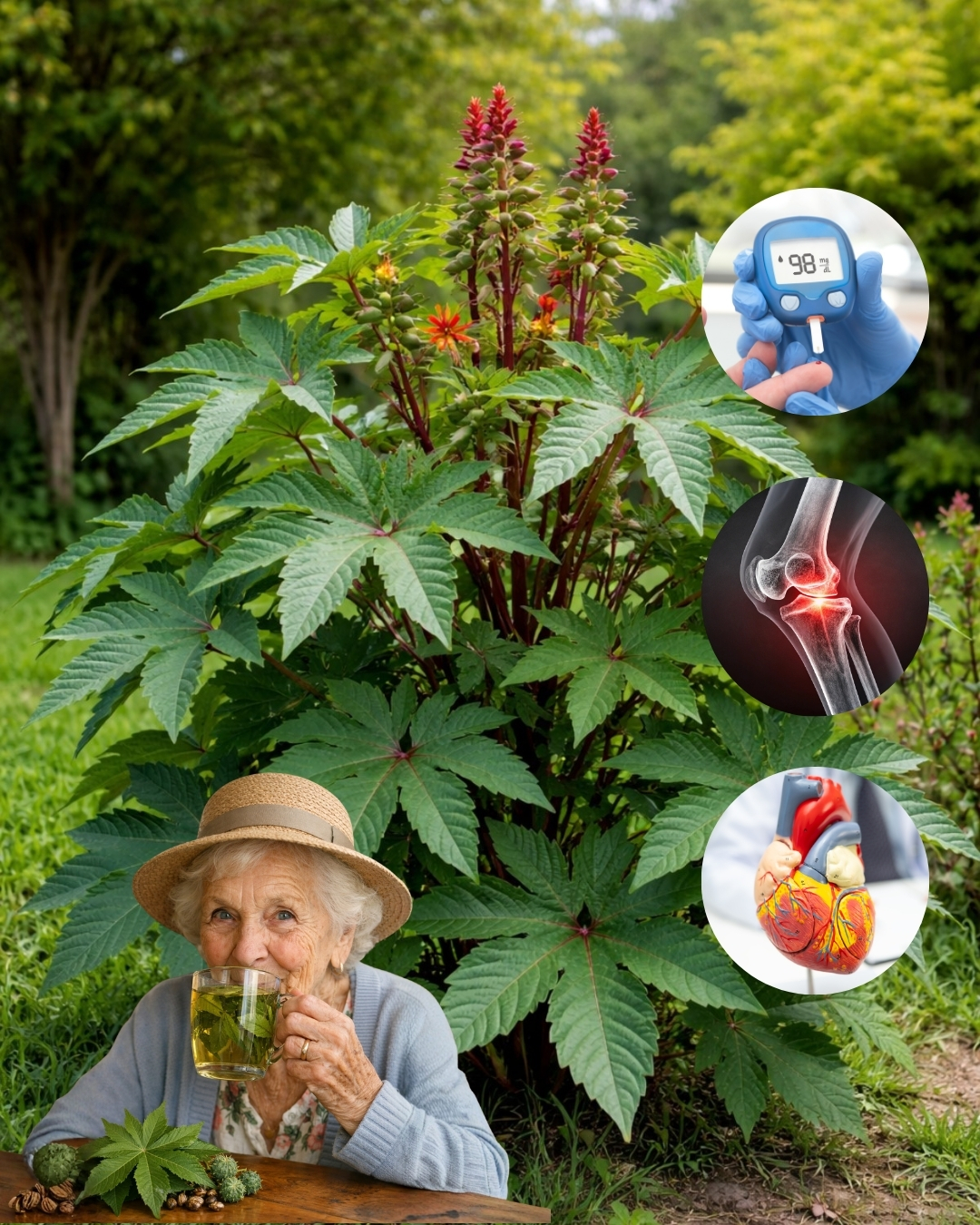
The medicinal uses of castor beans have been valued by various traditional cultures, especially in Latin America, Africa, and Asia. Also known as Indian castor bean or wild castor, this plant has been used for centuries for its laxative, healing, anti-inflammatory, and expectorant properties.
Despite its common appearance, the castor bean is a powerful plant. Its use should be responsible, as some parts of the plant, such as the seeds, contain toxic substances that can be dangerous if consumed without proper preparation.
In this article, I share the most effective medicinal uses of castor beans, how to prepare safe home remedies, and what precautions you should take to enjoy their benefits without risk.
1. Castor Bean Leaf Infusion to Improve Digestion
One of the most popular uses of castor beans is as a mild laxative. The leaves of this plant, prepared as an infusion, help stimulate bowel movements and improve digestion, especially in people with slow digestion.
Ingredients:
5 fresh castor bean leaves
1 cup of water
Pure honey (optional)
Preparation:
Wash the leaves well to remove impurities.
Cut them into small pieces and place them in boiling water.
Let it boil for 5 minutes, turn off the heat, and let it steep.
Strain and sweeten with honey if desired.
How to take it:
Drink one cup a day after lunch, for a maximum of 5 consecutive days. Rest for one week before resuming.
Benefits:
Stimulates digestion and relieves constipation.
Reduces abdominal bloating.
Promotes the natural elimination of toxins.
Supports healthy gut flora.
This is one of the safest medicinal uses of castor bean, as long as it is not prolonged.
2. Castor Oil for Skin and Muscle Pain
Castor oil is wonderful for skin care. Applied externally, it moisturizes, regenerates, and helps relieve muscle and joint pain thanks to its anti-inflammatory effect. It can also be useful for fighting minor skin infections.
Ingredients:
1/4 cup olive oil
10 drops castor oil
Preparation:
Mix both oils and store them in a dark glass jar, tightly sealed, in a cool place.
How to apply:
For dry skin: apply a small amount to the affected area twice a day.
For muscle pain: warm the oil slightly and massage gently.
For minor wounds: disinfect first and then apply a drop of oil.
Benefits:
Repairs and softens cracked skin.
Soothes irritations caused by fungi or bacteria.
Helps reduce blemishes, scars, and fine lines.
Relaxes tense muscles and relieves pain.
This is another highly valued medicinal use of castor bean, especially in rural areas where access to pharmaceuticals is limited.
3. Homemade Castor Bean Syrup to Relieve Coughs
Castor bean is also useful for respiratory illnesses, as it has expectorant properties. Prepared as a natural syrup, it can help clear mucus and soothe coughs.
Ingredients:
1 tablespoon of dried castor bean leaves
1 cup of water
2 tablespoons of pure honey
Juice of half a lemon
Preparation:
Boil the water and add the dried leaves.
Simmer over low heat for 10 minutes.
Strain, let it cool slightly, and add the honey and lemon juice.
How to take it:
Take one tablespoon every 8 hours for 5 days. Do not extend the treatment without consulting a healthcare professional.
Benefits:
Helps expel phlegm.
Soothes a sore throat.
Relieves dry and productive coughs.
Reduces bronchial inflammation.
This remedy is especially useful during cold and flu season or when weather changes.
Other medicinal uses of castor bean: In addition to the above remedies, castor bean has been traditionally used for other ailments:
Intestinal parasites: With medical advice, the purified extract of the plant has been used to eliminate intestinal worms.
Scalp stimulation: The oil, applied with massage, can help improve circulation and promote hair growth.
Menstrual cramps: Warm compresses with castor bean oil on the abdomen can relieve menstrual discomfort.
These medicinal uses of castor bean should be undertaken with great caution, preferably under the guidance of a natural medicine expert.
Important Precautions and Warnings: Castor bean is a powerful plant, but it is not without risks. The greatest danger lies in its seeds, which contain a toxin called ricin. The seeds should never be consumed directly or used without advanced knowledge.