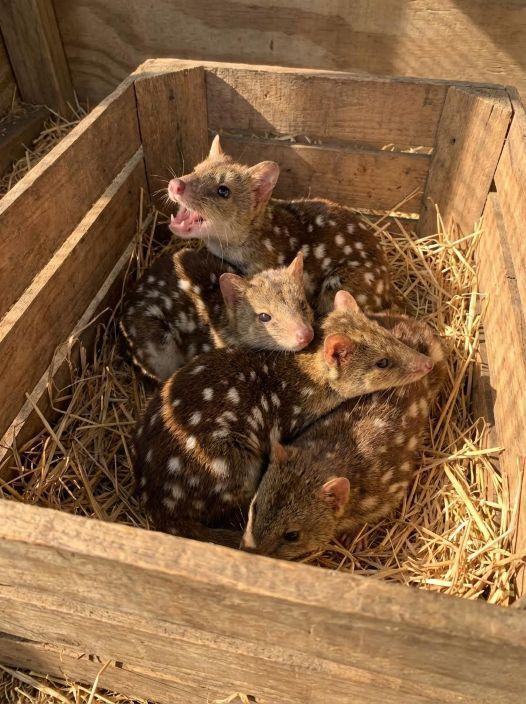
Hope is alive and thriving in Australia’s wild heart! At Mt Gibson Wildlife Sanctuary, a species once teetering on the brink of extinction is making an inspiring comeback. Conservationists are celebrating after confirming the arrival of newborn western quolls—tiny, spiky symbols of a future filled with promise. This isn’t just a scientific milestone; it’s a victory for nature itself.
Western quolls, or chuditchs, are carnivorous marsupials roughly the size of a house cat. Once widespread across Australia, their numbers plummeted after European settlement due to habitat destruction, invasive predators, and environmental changes. Their disappearance upset local ecosystems, as quolls play a crucial role controlling insects, reptiles, and small birds.
To reverse this decline, dedicated conservation teams reintroduced western quolls to Mt Gibson—a region where they had long vanished. The mission was more than survival; it was about creating a thriving, self-sustaining population. The discovery of pouch young shows these marsupials are not just surviving—they’re thriving, finding food, shelter, and safety, and passing life on to the next generation.
Senior Field Ecologist Georgina Anderson reports that camera traps are capturing quolls confidently exploring their home. One fan-favorite, nicknamed Aang, appears regularly at monitoring sites, providing researchers with hope and reassurance that the quolls are settling in beautifully.
This breakthrough at Mt Gibson is a powerful reminder: with patience, science, and protection, even species pushed to the edge can bounce back. It’s proof that careful conservation can turn the tide for wildlife—and give Australia’s natural landscapes a fighting chance.