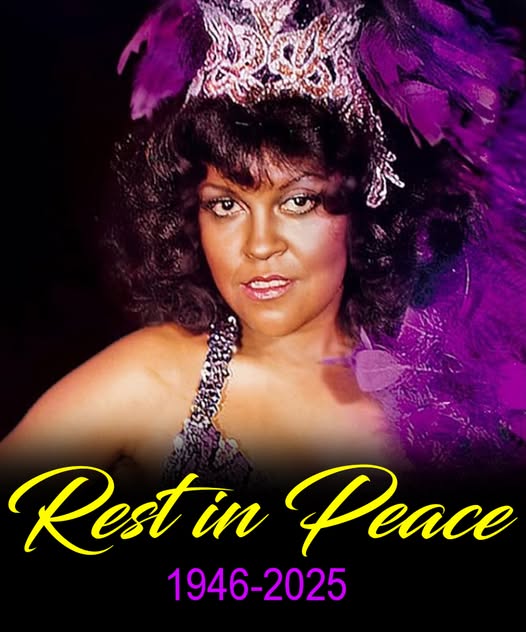
The streets of Manhattan are paved with millions of stories, but few possessed the iridescent glow and iron-willed grit of the woman the world came to know as Tanqueray. Stephanie Johnson, born Aquila Stephanie Springle, was a living bridge between the vanished, smoke-filled nightclubs of mid-century New York and the hyper-connected digital age of the 21st century. Her passing on October 11, 2025, at the age of 81, marks the end of an era for a specific kind of urban folklore—one defined by rhinestones, mob bosses, and an uncompromising refusal to be anything other than a headliner.
Her life began far from the neon lights of Chelsea, in the strict religious and impoverished environment of Albany, New York, in 1944. The early chapters of her biography were marked by the kind of hardship that would break a lesser spirit: she was cast out of her home as a pregnant teenager and faced a brief period of incarceration. These “gritty beginnings,” as she called them, became the forge in which her survival instinct was tempered. When she finally fled to Manhattan, she wasn’t just looking for a new home; she was looking for a new identity.
In the 1960s and ’70s, Stephanie reinvented herself as “Tanqueray,” a name that would eventually become synonymous with the golden age of New York burlesque. She was a self-made artist in the truest sense, hand-stitching her own costumes—intricate ensembles of beads and feathers—that allowed her to command the after-hours circuit. Her career was a masterclass in navigation; she moved seamlessly through the city’s diverse and often dangerous subcultures, from the burgeoning drag and fetish scenes to the shadowy, mob-run establishments of the era. She famously recalled being “the only Black girl making white girl money” in those rooms, a feat she achieved through a combination of undeniable talent and sharp street smarts. To survive the “shady bosses,” she even learned to speak Italian behind the curtain, reading the room with the precision of a seasoned diplomat.
For decades, Tanqueray remained a “downtown legend,” a woman whose history was etched into the memories of Chelsea locals who caught glimpses of her iconic style. However, her second act began in 2019, when a chance encounter with Brandon Stanton, the creator of Humans of New York, catapulted her into global consciousness. Spotted on a sidewalk wearing a vibrant red patchwork coat with fur trim, Stephanie began to talk, and the world stopped to listen. What followed was a 33-part serialized storytelling event that captivated millions.
The appeal of Tanqueray’s viral fame wasn’t just the “X-rated” nature of her memories—though those were undeniably colorful—it was the profound, unvarnished honesty of her narration. She spoke of the fashion, the hustle, and the deep emotional cost of survival with a timing that rivaled the great comedians. Her voice resonated so deeply with the public that a GoFundMe campaign launched to assist with her medical expenses raised over $2.5 million, a staggering testament to the impact of her story. In 2022, her memoir, Tanqueray, became a bestseller, cementing her status as a literary voice for the voiceless.
Despite the sharp edges and the bravado she presented to the world, those closest to her, including Stanton, noted a surprising softness. She was a woman of dualities: a burlesque star who could navigate a mob club with ease, yet a person who slept with a teddy bear until her final days. This vulnerability was the “in-between part” of her life that she often shielded from the spotlight. She once remarked that she hoped for a highlight reel of her life in the afterlife, but “just the funny parts,” fearing that the reality of the struggle would bring even the Creator to tears.
Stephanie Johnson understood the currency of presence. She wasn’t just a survivor of the “New York cinema” life; she was its director. Neighbors in Chelsea recalled her as a constant, charismatic presence, whether she was shopping at Eataly or traversing Grand Central Terminal. She turned her hard-won experiences into a form of combustible performance art, proving that charisma and craft could remake a life even in its ninth decade.
Her legacy is one of bridge-building. She connected the struggles of a Black woman in the mid-century North with the digital empathy of the 21st century. She showed a generation of young artists that being a “working artist” often means being a “working survivor” first. She refused to be edited down by society’s expectations of age, race, or profession. Instead, she leaned into the sparkle, using her rhinestones to catch the light even in the city’s darkest corners.
The outpouring of grief following her stroke and subsequent passing has been immense. From the fans who followed her every post on Humans of New York to the neighbors who shared brief, unforgettable anecdotes of her wit, the consensus is clear: Stephanie “Tanqueray” Johnson was a folk hero of the highest order. She was a reminder that the most indelible stars are often the ones who have lived through the most shadow.
As the lights dim on the stage she once inhabited, her voice remains preserved in her bestseller and the digital archives that brought her to the world. She taught us that a great story is the ultimate weapon against oblivion. In the end, Tanqueray didn’t just survive New York; she conquered it, leaving behind a legacy of survival, style, and a storyteller’s heart that will continue to inspire anyone who finds themselves trying to write a different script for their own life.