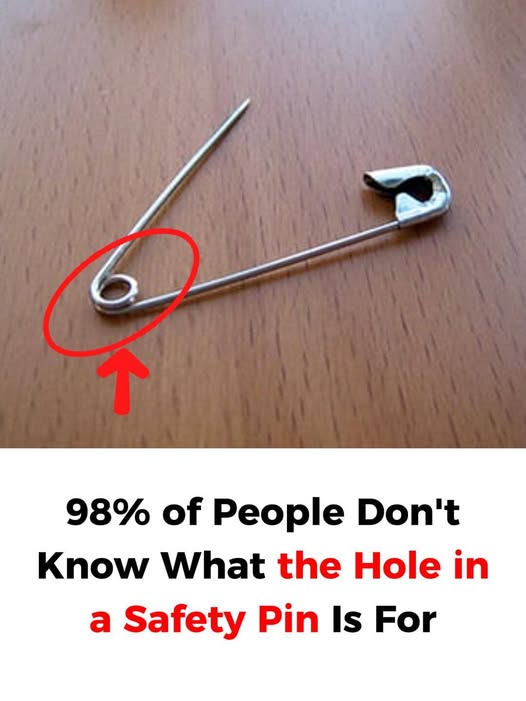
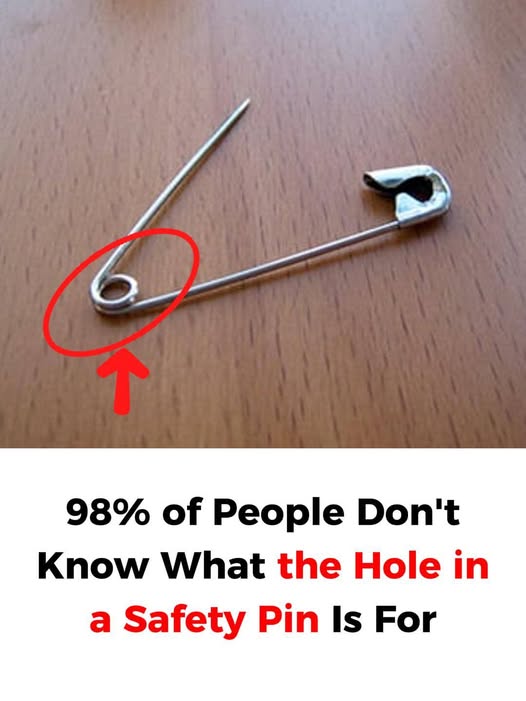
Safety pins are among the most practical inventions in sewing and everyday life, yet many people overlook one small feature that makes them especially clever: the tiny hole near the clasp. At first glance, it appears decorative or unnecessary. In reality, this subtle detail was intentionally designed to improve stability, control, and versatility, turning a simple fastener into a multi-purpose tool used across households, crafts, and emergency kits.
The primary function of the small hole is to allow a thread, yarn, or thin cord to pass through it. When sewn or tied in place, the safety pin becomes far more secure and less likely to twist, slide, or rotate on fabric. This is especially useful when working with delicate, stretchy, or slippery materials where ordinary pins may shift. By anchoring the pin through the hole, users gain greater precision and reliability during sewing or alterations.
Beyond sewing, the tiny hole offers a smart solution for organization. Crafters often thread multiple safety pins onto a string or wire through these holes, keeping them together and preventing accidental loss or painful pricks. This method makes storage safer and more efficient, especially in sewing boxes or travel kits. The design also allows users to hang pins neatly on hooks or loops when not in use.
The hole becomes even more valuable in outdoor or emergency situations. It can be used to attach a safety pin to a keychain, lanyard, backpack, or piece of gear, ensuring it’s always within reach. From quick clothing fixes to securing equipment, this small feature reflects brilliant, low-cost engineering. The safety pin’s tiny hole proves that thoughtful design doesn’t need complexity—sometimes, the smartest solutions are hidden in plain sight.