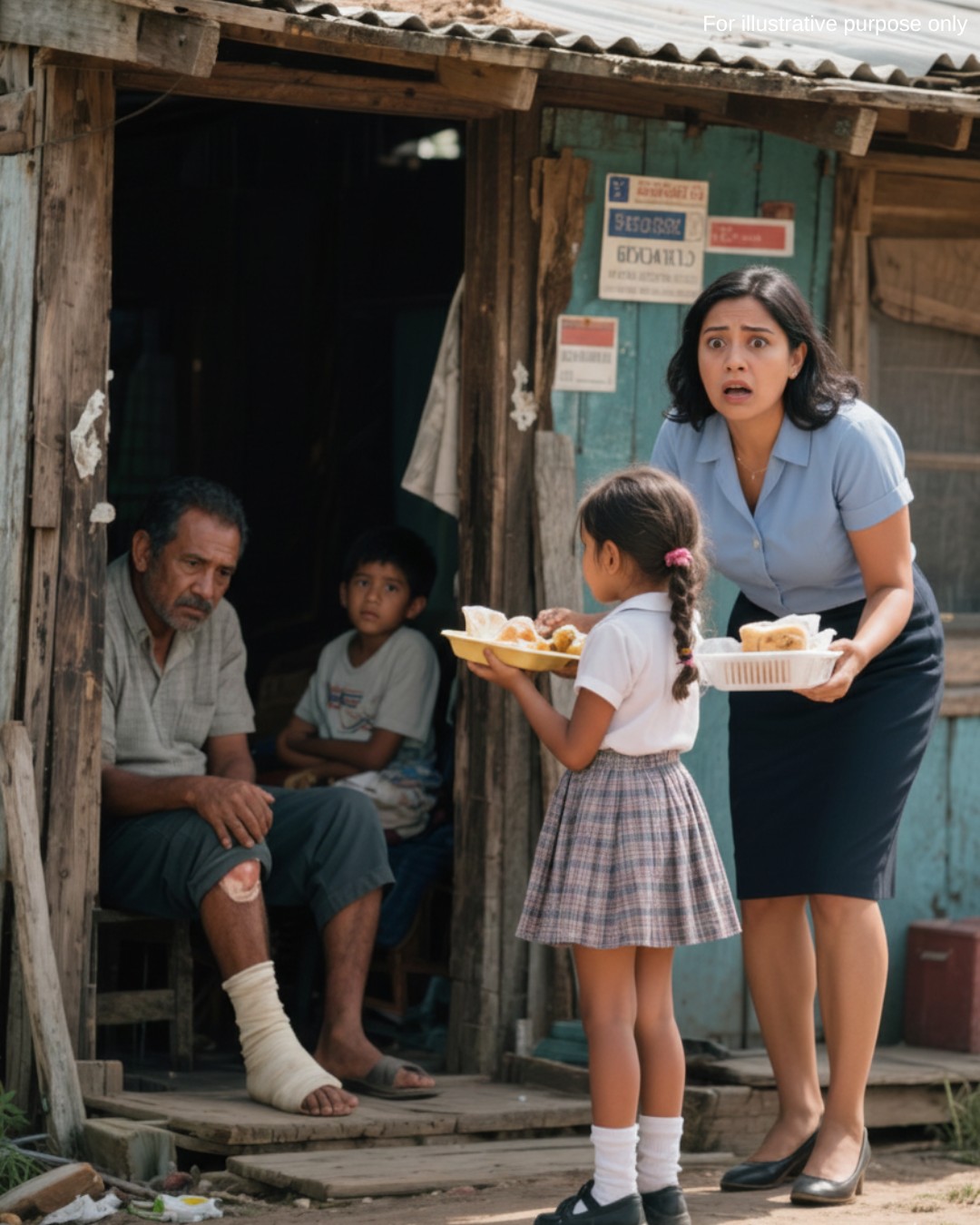
The lunch bell rang across the playground at Cedar Brook Elementary, its bright chime drifting through the cool early-autumn air. I, Beatrice Nolan, stood beside my classroom door, watching my second graders file back from the cafeteria. Their voices carried the lingering smell of fruit cups and warm rolls clinging to their sweaters. As they lined up, I counted out of habit. Twenty children. Then twenty-one. Then I stopped. One was missing. Mira Parker. Again.

For several days, Mira had been disappearing during transitions. She claimed she’d been reading in the library, but the librarian assured me she hadn’t been there. The repetition of it unsettled me. What had started as a faint concern had grown heavier with each passing day.
I asked my classroom helper, a reliable boy named Rory Chen, to begin silent reading. Then I stepped into the hallway, pulling my cardigan tighter against the chill seeping in from the stairwell windows. Three years of living alone since my husband died had sharpened my awareness of absence. When something was wrong, I felt it immediately. I checked the restrooms and water fountains before moving toward the cafeteria, where staff were already cleaning, their mops tapping steadily against the tiles.
“Have any of you seen Mira Parker?” I asked. “She usually carries a teal backpack.”
One worker shook her head. “She came through the line, but I don’t think she ate more than a bite. The little one hardly touches her food.”
That remark settled uncomfortably in my mind. Mira had seemed tired and distracted all week. I stepped outside again, scanning the playground. Nothing. Then I caught a flash of teal near the edge of the building. A backpack slipping toward the woods behind the school.
I crossed the blacktop quickly and entered the tree line. Students weren’t allowed there unsupervised, and the purposeful way Mira moved told me she wasn’t wandering. I sent a quick message to the school office explaining where I was, then followed her from a distance.
The narrow path wound through maple trees just beginning to turn gold and flame. Mira stopped near a fallen log and opened her backpack. She pulled out her lunchbox, then put it back without eating. After that, she continued toward the creek marking the boundary between school grounds and a nearby neighborhood.
When she reached a clearing, I saw a makeshift shelter built from a battered tent, tarps, and pieces of plywood. A man sat beside it, his head buried in his hands. Nearby, on a blanket, lay a small boy, flushed and restless in sleep.

“Papa,” Mira said softly. “I brought food. Is Finn doing any better?”
The man lifted his head. His face was worn with exhaustion, yet his eyes showed deep care for his children.
I stepped forward carefully, not wanting to startle them. Leaves crunched under my shoes.
“Mira,” I said gently.
She spun around, eyes wide with fear. The man stood quickly, protective.
“I am Beatrice Nolan,” I said. “I am your daughter’s teacher.”
He let out a heavy breath. “I am Ivor Parker,” he said. “And that is my son, Finn.”
Finn’s breathing was shallow, his skin far too warm. I touched his forehead and felt the heat immediately. It was clear he needed medical attention.
Ivor tried to explain. He’d been giving Finn children’s medicine, but they’d run out. After medical debts from his wife’s illness, they’d lost their home. Nearby shelters had no room for families with young children. They were surviving however they could. Mira had been giving away her lunches because the three of them shared whatever food Ivor managed to find.
The situation was urgent. I told Ivor that Finn needed help right away. He resisted, terrified authorities would take his children. The fear in his voice was so raw it nearly broke me. Still, there was no alternative. I called an ambulance.
At Riverside General, doctors diagnosed Finn with pneumonia. He needed fluids and antibiotics. A social worker, Alicia Morren, arrived to assess the situation. Her role required her to report the family’s homelessness, and she explained that temporary foster care was an option until housing could be secured.
Mira clung to her father, looking at me with frightened eyes. The thought of them being separated filled me with urgency.
I asked Alicia what would change the recommendation. She said stable housing and a clear income plan would be enough to keep the family together. The answer settled into me with sudden clarity.
I offered them the spare room in my modest two-bedroom apartment. The suggestion stunned both Ivor and Alicia. It was unusual, but allowed. After discussions and written agreements, the plan was approved.
Over the next sixty days, Ivor worked relentlessly to rebuild. With help from local programs and his own quiet resilience, he secured temporary housing, then steady work at a nearby distribution center.

Six months later, on a warm June afternoon, I stood with him outside a small home he had just purchased. Finn played in the yard with an energetic terrier puppy, while Mira arranged stickers on her new bedroom door. Ivor carried boxes inside with an ease that had been missing during those bleak autumn weeks. His smile came easily now.
He stood beside me and thanked me for believing in them when everything felt impossibly heavy. I told him the truth. Helping his family had awakened a part of me grief had long muted.
That day marked a new beginning for them.
And, in many ways, for me too.