Becoming a single mother was never something I had imagined for myself, and certainly not at such a young age.
When I married my first husband, Oliver, I believed I was stepping into the life I had carefully dreamed of since childhood: a cozy home, laughter echoing through hallways, shared responsibilities, and the steady comfort of growing old beside the person who vowed to love me for a lifetime.
Reality, however, unraveled that dream with shocking speed.
Our son, Mason, was only a few weeks old when Oliver vanished from our lives.
One morning, I woke to the unfamiliar silence of an empty house.
His side of the bed was cold, his scent already fading from the pillow.
At first, I convinced myself he had simply stepped out for a walk, or maybe to pick up coffee.
But when my eyes drifted to the open closet, a chill ran through me. The suitcase was gone. So were his shoes.
His favorite jacket, the one he wore on every chilly morning, was missing, too.
My hands trembled as I clutched my phone and called him again and again. Each attempt went straight to voicemail. Finally, desperate for answers, I dialed his longtime friend, Andrew.
“Hello?” he answered, his voice hesitant.
“Andrew, have you seen Oliver this morning? He’s not here,” I said, my voice cracking.
There was a long pause on the other end, followed by a heavy sigh. “Grace… I think you should sit down. This isn’t going to be easy to hear.”
That was the moment the truth began to surface. Oliver hadn’t stepped out for a quiet morning walk. He had left. He had run off with someone else, a woman he had been secretly seeing for months, and made plans for a new life that didn’t include our newborn child.
The world I thought I knew collapsed in an instant.
The days that followed blended into one blurred stretch of exhaustion and heartbreak. I barely ate. I hardly slept.
Some nights, I sat in the rocking chair and stared at the wall, holding Mason against my chest as he slept, wondering where I had gone wrong, what I could have done differently.
There were moments when I blamed myself, convinced that I hadn’t been enough to keep my husband by my side.
But as the weeks passed, that painful narrative began to shift. Slowly, I came to understand that his betrayal had nothing to do with my worth.
Oliver wasn’t searching for something better; he was simply running from responsibility.
And I refused to let his cowardice define who I was going to become.
So I focused all my energy on my son.
My mother became my greatest support, watching Mason while I worked longer hours and began piecing my life back together.
Every one of his smiles helped stitch a tiny part of my heart back into place. The sound of his laughter became my healing.
I didn’t have the life I once imagined, but in time, “just the two of us” started to feel more like a blessing than a tragedy.
For several years, it was enough.
Then, on an ordinary Tuesday afternoon, my world tilted again — in a way I never saw coming.
I had stopped at my usual café after work, planning to enjoy a rare moment of silence before picking Mason up from preschool.
While attempting to pay, my card refused to process. I fumbled with my wallet, embarrassed as the line behind me grew longer.
“Here, let me help,” a voice behind me offered gently.
I turned and met a man with warm eyes and a kind, reassuring smile. He tapped his card, and the transaction went through before I could properly protest.
“You really didn’t have to do that,” I murmured.
“It’s just a cup of coffee,” he said with an easy shrug. “No big deal.”
“Well,” I said with a small smile, “at the very least, you have to give me your name so I can thank you properly.”
“Victor,” he replied.
“Grace,” I answered.
That simple exchange turned into texts. Those texts grew into long phone calls that lasted well past midnight.
Victor worked in financial advising, was thoughtful, attentive, and seemed sincere in every possible way.
When I eventually mentioned Mason, I held my breath, afraid he might disappear like so many others.
Instead, Victor smiled genuinely. “That’s part of you. Anyone who wants to be with you has to accept that, and I do.”
That reassurance lit a small flame of hope inside my chest.
We dated for over a year before he proposed. During that time, Victor was kind, gentle, and patient.
He played with Mason, listened to his endless stories about dinosaurs and superheroes, and even attended preschool events when my schedule didn’t allow me to.
Mason, who had always been shy around men, seemed to accept him eagerly.
He laughed at Victor’s silly impressions, held his hand while crossing streets, and even changed how he introduced him to others: “This is Victor. He’s my bonus dad.”
Those words made my heart soar.
When we got married in an intimate ceremony, I believed that life had finally rewarded me for all the years of pain. I truly believed we were a family.
At least… I thought we were.
The first signs of trouble were quite nearly invisible. But my mother noticed them before I did.
One evening, as we washed the dishes together, she gave me a worried look. “Grace,” she said softly, “have you noticed how Mason acts whenever Victor walks into the room?”
I frowned, confused. “What do you mean?”
“He goes silent. Sometimes he whimpers. His entire body tenses up. That’s not normal behavior for a child who feels safe.”
At first, I brushed it aside. My mother had witnessed the devastation Oliver caused, so her protective instincts were heightened. I convinced myself Mason was simply dealing with change, adjusting to a new dynamic in our home.
But that night, I paid closer attention.
Mason had been chatting happily with me on the couch, excitedly showing me his drawings from school. But the moment Victor stepped into the living room, the energy shifted. My son stopped talking. His shoulders slumped. His eyes dropped to the floor. Within seconds, tears welled up for no obvious reason.
My heart clenched.
Later that night, once Mason was in bed, I approached Victor carefully.
“I’ve noticed Mason gets really quiet when you’re around,” I said gently. “Do you have any idea why?”
He looked genuinely surprised. “Really? I had no idea. I adore that kid. Maybe he’s still adjusting to having another adult in the house.”
His explanation made sense on the surface — and because I loved him, I wanted to believe him.
But a seed of doubt had already been planted.
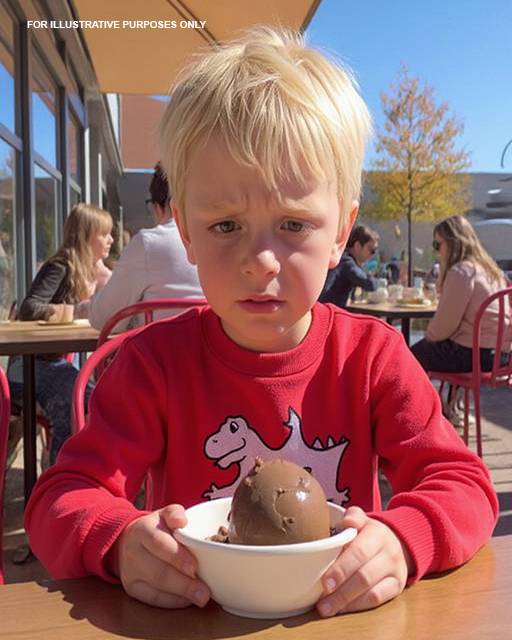
A few days later, while out for ice cream, I decided to ask Mason directly.
“Sweetheart,” I said softly, brushing the chocolate from his cheek, “can you tell me why you sometimes get sad when Victor is around?”
His hand stilled. He avoided my eyes.
“You can tell me anything,” I reassured him. “I will never be mad at you.”
In a voice barely louder than a whisper, he said, “I heard him talking on the phone… He said I make things harder. That I shouldn’t be here.”
My stomach dropped.
“He said that?” I asked quietly.
Mason nodded. “He doesn’t want me, Mommy. Will he leave me like the other daddy did?”
I wrapped him in my arms, fighting the tears gathering in my own eyes. “No one is ever leaving you again,” I whispered fiercely. “That will never happen.”
That evening, I confronted Victor.
“Mason heard you say he’s a problem,” I told him.
His expression shifted — hurt, then defensive. “Grace, I would never say that. I was talking to my brother about a situation at work. A project was becoming a problem. I swear, your son’s name never even came up.”
He sounded convincing. Calm. Confident. And again, my heart chose love over fear.
But my mother did not.
“Grace… you need to trust your instincts,” she warned. “And your child’s.”
Over the following week, I paid close attention. I noticed how Victor often sighed deeply when Mason spoke too loudly. How his smile tightened when Mason became too energetic. How patience was replaced with irritation the longer he had to be around him.
It wasn’t cruelty. It wasn’t violence. But it wasn’t love either.
And that realization shattered everything.
One late evening, after Mason had gone to sleep, I sat across from Victor at our kitchen table.
“I don’t think you see Mason as part of this family,” I said slowly. “And if that’s true, then this marriage cannot continue.”
His silence was the answer I needed.
In that moment, something crystallized for me: I had spent too many years fighting to make broken relationships whole. I had sacrificed too much of myself trying to keep people who never truly saw us.
“This home belongs to Mason and me,” I continued, my voice steady. “If you cannot love him the way he deserves, then you no longer belong here.”
There was no screaming. No blame-shifting. Just acceptance.
Within weeks, our marriage ended quietly — without drama, without revenge — just clarity.
Life slowly regained its rhythm again. Mason blossomed. The tension that had clouded him disappeared, replaced by giggles, light, and confidence. It was as if he had been carrying a weight only a child could sense but not fully name.
One evening, as we sat on the couch reading, he looked up at me and smiled.
“Mommy?”
“Yes, sweetheart?”
“You chose me.”
His simple words shook me to my core.
“Yes,” I replied softly. “Every time. And I always will.”
In that moment, I realized the truth: my son had saved me long before I saved him. His sensitive heart, his quiet signal of discomfort, his whisper — it had spared us a life of silent sadness.
Love didn’t have to be complicated. It didn’t have to hurt.
It just had to feel safe.
And in our little world, it finally did.