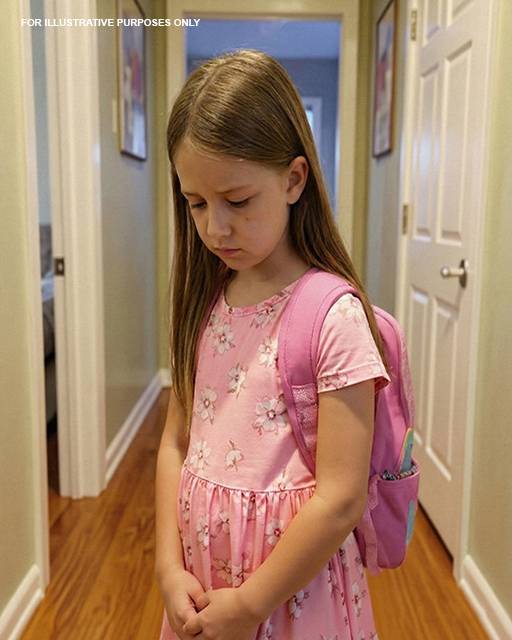
When I divorced my ex-husband, I understood at least theoretically that co-parenting would be messy.
We had always been two very different people, with different expectations, different temperaments, and different ideas about parenting.
We tried to remain civil for our daughter, Lila, who was nine when the papers were finalized, old enough to sense the strain between us, but still too young to fully understand why her family was splitting in two.
She adored her father, though. Despite all his flaws, he had always been the kind of dad who let her stay up late watching movies, who bought her candy when I said she’d had enough, who teased her gently until she giggled uncontrollably.
I never wanted to take that from her. Every other Friday, she packed her overnight bag, slung her backpack over her shoulder, and waved at me through the back window of his car as they drove away.
For years, at least at the start, she’d return on Sunday evenings tired but smiling, her hair messy from whatever adventures she and her dad had gotten into, her stories tumbling out of her mouth as she dropped her bag on the living-room floor.
That blissful normalcy didn’t last.
The first sign came with her beloved doll, Harper, an American Girl doll she had begged for and cherished like a baby sister.
Harper had been everywhere with her doctor appointments, road trips, and grocery stores.
She brushed Harper’s hair every night. She tucked her under her blanket. She whispered secrets to her that she didn’t tell me.
So when Lila came home one Sunday evening without Harper, I noticed immediately.
“Where’s Harper?” I asked as she unpacked her overnight bag.
She froze mid-movement, her small fingers closing around a pair of socks. “Oh,” she said, voice light in that way children sound when they know adults are watching too closely. “I… think I left her at Dad’s.”
I forced a smile. “Well, we’ll get her next time.”
But next time came and went, and Harper still didn’t return.
When I asked about her again, Lila shifted uncomfortably. “Dad said he couldn’t find her.”
The answer didn’t sit right with me. Lila was forgetful sometimes, what kid isn’t? But she wasn’t careless with Harper. Still, I made myself let it go. I didn’t want her caught in a tug-of-war over a doll.
I reassured myself: Kids lose things. It happens. Don’t make it bigger than it needs to be.
I wish I had trusted my instincts then.
The second sign was harder to brush off.
Her iPad disappeared.
That iPad was special. Lila had spent nearly a year doing extra chores, rolling coins, saving allowance money, and counting down until she finally had enough for me to chip in the rest. She used it to draw, to write stories, and to watch marine biology videos. It was her most prized possession aside from Harper.
When she came home one weekend without it, I asked, “Sweetheart, where’s your iPad?”
Her shoulders lifted and dropped in a small, defeated shrug. “Dad’s keeping it safe.”
“Keeping it safe?” I repeated cautiously. “What does that mean?”
She chewed the inside of her cheek. “He just said… I don’t need it here.”
Something twisted sharply in my chest. “Did you want to bring it home?”
“I don’t know.” She bit her lip. “I guess.”
The way she said I guess as though unsure she was allowed to want something, made me nauseous.
I debated confronting my ex, but I didn’t want to add tension. Divorce was hard enough on her. So once again, I told myself to wait. To observe. To not overreact.
Then came the final straw: my mother’s necklace.
A delicate gold chain with a tiny heart pendant, nothing extravagant, but priceless to me. It had been my mother’s favorite, and after she passed when Lila was little, I kept it tucked safely in my jewelry box until Lila was old enough to wear it without losing it.
She only wore it occasionally, usually when she felt like she missed her grandmother more than usual. One Friday morning, as she was packing for her weekend with her dad, she asked if she could wear it.
“I want to show Dad,” she said. “He said he remembers Grandma.”
I hesitated, but her eyes were so hopeful.
“Okay,” I said softly. “Just be careful.”
“I will. Promise.”
But on Sunday evening, the necklace wasn’t around her neck.
“Where’s Grandma’s necklace?” My voice wobbled despite my attempt at calm.
Her eyes watered instantly. “I—I wore it there. And Dad said he’d put it somewhere safe. He said he didn’t want it to get lost.” Tears spilled over. “But when I asked for it back today, he said he… he couldn’t find it.”
She started to sob, a sound so small and fractured that it sliced through me.
I wrapped her in my arms, but inside, a hot coil of dread tightened. Something wasn’t right. Something was very, very wrong.
That night, after tucking her in, I called my ex.
He answered, sounding irritated. “What now?”
“My mother’s necklace,” I said, forcing my voice steady. “Where is it?”
He sighed dramatically. “Your daughter is careless. She probably lost it. I can’t watch her every second. You baby her too much.”
“She’s not careless,” I snapped.
“Well, she lost her doll, didn’t she?”
My stomach churned. The dismissiveness in his voice felt familiar, the same tone he used toward the end of our marriage. It was the sound of a man who knew he was lying.
After we hung up, I stared at the ceiling for hours, my thoughts spiraling. My instincts screamed that he was taking things, but why? For what reason? Was it spite? Manipulation? Something worse?
People told me I was overthinking. That divorce paranoia was a thing. Those kids lose track of their belongings. But my gut had never screamed this loudly before.
So I acted.
I purchased an AirTag the next morning.
I stitched it carefully into the lining of Lila’s favorite blue hoodie, the one she always wore when she visited her dad. She didn’t notice. I didn’t tell her. I hated keeping secrets from her, but I needed clarity before stirring up any legal mess.
When she left that Friday, I opened the Find My app and watched the tiny dot move across town. My heart slowed when it settled at his house, normally. Safe.
But late Saturday afternoon, the dot shifted.
Not to a restaurant.
Not to a park.
Not to the grocery store.
It moved downtown to a pawn shop.
My breath left me in a single crushed exhale. I refreshed the map again and again, convinced it was an error. But no, the dot remained. For almost an hour.
Then it traveled back to his home.
I sat frozen, hands trembling. I knew. I already knew.
But part of me still clung to some microscopic shred of hope that maybe he bought something there. Maybe the hoodie wasn’t with Lila at the time. Maybe—
But no. Hope was denial wearing a flimsy disguise.
The next weekend, I added another layer.
A tiny recording device, barely larger than a keychain charm, slipped inside a small inner pocket of Lila’s backpack. She never noticed. And I hated myself for it. But I had to protect her. I had to know the truth.
When she returned Sunday evening, I waited until she was asleep before retrieving the device. I sat alone at the kitchen table, hands braced against the wooden surface, listening.
The first minutes were muffled. Background noise. Dishes clattering. A TV.
Then Lila’s sweet voice.
“Dad, can I have my doll back?”
His reply came sharp and impatient. “I told you not to bring it up again.”
“But it’s mine,” she whispered.
“You don’t need it,” he snapped. “Stop asking.”
A moment of silence. Then:
“Dad… my iPad?”
“It’s better off where it is.”
“But—”
“Enough.”
A chair scraped. His voice dropped lower, colder. “You don’t understand how things work. Some things are worth money. Sitting in your room collecting dust doesn’t help anyone.”
My heart hammered painfully.
Lila’s voice cracked. “What about the necklace? Mom said—”
“That necklace was wasted on you,” he hissed. “It’s gone. Forget about it.”
When the recording ended, I sat there, staring at nothing, numb with shock and seething with rage at the same time.
He was stealing from her.
He was selling her possessions, items that were meaningful, sentimental, irreplaceable.
He had been guilt-tripping her, controlling her, and manipulating her into silence.
And she had been carrying that weight alone.
I wanted to drive to his house and tear the door off its hinges. I wanted to scream at him, call him every name I had carefully avoided using during the divorce.
But I knew an outburst would only give him ammunition. He’d twist my words, paint me as unhinged, use my anger against me, and maybe even convince Lila that she was mistaken.
No. I needed something airtight.
So I gathered proof.
Armed with the AirTag history and the recordings, I drove to the pawn shop downtown. I expected the owner to shrug, tell me nothing could be traced.
But he recognized the items immediately.
“Oh yeah,” he said, flipping through his ledger. “That man brought in a doll with brown hair, an iPad, and a gold necklace with a little heart charm. Sold all three. The necklace went fast. Shame—it was pretty.”
I asked for receipts. He printed everything he had.
My hands shook as I held the papers.
The last thread of doubt snapped.
I called my lawyer the moment I got back into my car.
What followed was a grueling process of court hearings, affidavits, and interviews. My ex blustered, denied, and feigned outrage. He insisted Lila had lost the items, accused me of coaching her, and painted himself as the victim of a vindictive ex-wife.
But the evidence was overwhelming.
The AirTag timeline.
The audio recordings.
The pawn shop receipts.
The judge didn’t even need to deliberate long.
My ex lost his weekend visitation rights. His new schedule allowed formal, supervised visits only. He was ordered to pay restitution for the sold items, though money meant nothing when the necklace was already around a stranger’s neck.
The day the ruling came down, Lila sat on her bed with her knees pulled to her chest, eyes brimming with tears.
“Does Dad hate me now?” she whispered.
“Oh, sweetheart.” I sat beside her and brushed her hair back gently. “He loves you. He just made choices he shouldn’t have. And none of it—none of it—is your fault.”
“But… I still want to see him.”
“I know.” My voice wavered. “And you will. Just not the same way. But you’re safe. That’s what matters.”
She leaned into me, her small hand gripping mine tightly. That night, she slept curled against me like she hadn’t since she was much younger.
The following weeks were heartbreaking.
Lila second-guessed everything she touched.
“Can I wear this sweater to school?”
“Is it okay if I take my sketchbook outside?”
“Will someone take my bracelet?”
Every question was a reminder of how deeply her father’s actions had eroded her sense of security.
I reassured her, again and again, until the fear slowly ebbed.
Eventually, life pieced itself back together.
We found a new doll she adored—not Harper, but loved nonetheless. We saved for another iPad. I bought a simple chain to replace my mother’s necklace, and when she wore it, she’d trace the pendant thoughtfully, as though it still held the memories she cherished.
She blossomed again. Slowly, steadily.
As for me, I learned something I will never forget.
People will call you paranoid.
People will tell you you’re overreacting.
People will call you crazy for trusting your instincts.
But instincts exist for a reason.
And mine saved my daughter.
It took an AirTag, a hidden recorder, and a fierce determination to protect my child—but I uncovered the truth. I protected her. I showed her that her voice mattered.
Even when her own father tried to silence it.
And now she knows—without question—that I will always listen. Always fight for her. Always stand between her and anything that threatens her.