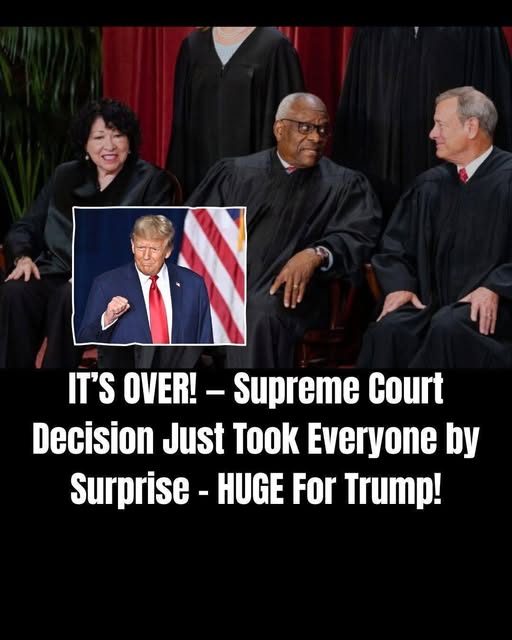
The Supreme Court’s eight to one ruling did far more than validate the arguments presented by Trump’s legal team. It reshaped the line that separates presidential authority from the nation’s moral responsibility to offer refuge. By overturning the lower court’s injunction, the justices signaled that the administration’s interpretation of Temporary Protected Status as an instrument of foreign policy held greater weight than its humanitarian purpose. For the roughly three hundred thousand Venezuelans who built lives under this program, that distinction is not an academic nuance. It is a crisis that reaches into living rooms, workplaces, and classrooms across the country.
Behind the rigid language of the opinion are lives that do not fit neatly into legal categories. Many of these families live in crowded apartments where generations share a single table. Others have opened restaurants, cleaning services, trucking companies, or small storefronts that serve their neighborhoods. Children born in the United States grow up with school routines, friendships, and dreams that feel entirely American. Parents attend city council meetings, volunteer at churches, and work long hours to keep households steady. For them, TPS has never been a loophole. It has been the fragile thread holding together a sense of stability.
The Department of Homeland Security memo issued by Kristi Noem intensified the emotional impact. In the memo, continued protection was described as contrary to the national interest. That language landed with the force of a rejection. It suggested that the presence of these families, and their contributions, were now considered a liability. At the same time, deportation figures rose sharply, crossing the mark of half a million removals. Supporters of the administration pointed to these numbers as proof that the country was regaining control of its borders. They argued that clear consequences deter chaotic migration and restore public confidence.
Critics saw something entirely different. They saw families divided by paperwork, long time residents treated like uninvited guests, and children forced into decisions that no young person should face. Many pointed out that TPS was never meant to be used as a lever of diplomatic pressure. They argued that people who had followed every rule, renewed every permit, and built entire lives within the boundaries of the law were now being swept away by a sudden change in interpretation.
As buses and planes prepare to transport people to countries they left in fear, the human cost becomes impossible to ignore. Some are returning to a homeland still marked by political instability, economic collapse, or the threat of persecution. Others are returning to places where they have no remaining family, no work prospects, and no sense of belonging. They leave behind mortgages, college plans, and businesses that may not survive their absence.
The ruling forces a reckoning with the gap between what this country promises and what it actually delivers to those who seek safety within its borders. Temporary Protected Status has always contained the word temporary, yet many recipients believed that their consistent compliance and community ties would be weighed with compassion. Instead they discovered how quickly a safeguard can become a trap when the political winds shift.
In the end, the decision asks the country to decide what kind of refuge it intends to offer. It challenges us to consider whether protection is a matter of policy alone or a reflection of the values we claim to uphold. For the families now facing an uncertain horizon, the answer carries life altering consequences.